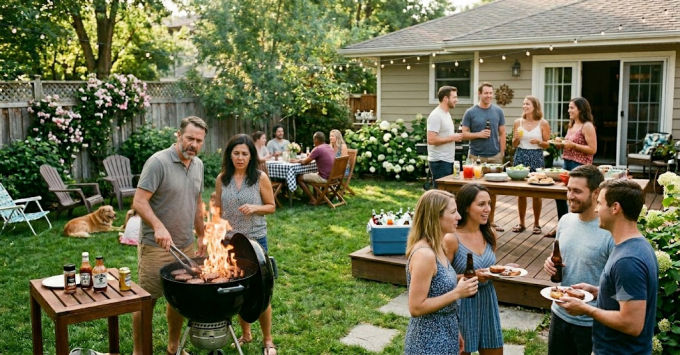
Generally speaking, your Homeowners insurance policy can provide financial protection if a guest is injured or if accidental property damage occurs during your summer gatherings. Liability coverage is typically the part of your policy designed to help manage costs if you are found responsible for these types of accidents.
Understanding Your Liability Coverage
When you host friends and family, you become responsible for the safety of your space. If a guest trips on your patio or gets burned by the grill, your policy may help cover those expenses, depending on the details of your specific plan.
Most Homeowners insurance policies include a few ways to handle these risks:
- Personal Liability: This generally helps with legal costs, settlements, or judgments if you are sued because of an injury or property damage.
- Medical Payments to Others: This is often a smaller, no-fault amount that can help cover a guest’s medical bills for minor injuries, regardless of who is at fault.
- Property Damage: This can come into play if you or someone in your household accidentally damages a guest’s belongings.
Examples Of Potential Claims
To help visualize how this might work, consider these two scenarios:
- Injury Scenario: Imagine a guest slips on a wet deck near the pool and breaks their wrist. If you are found responsible for the hazard, your liability coverage may help pay for their medical bills or potential legal costs.
- Property Damage Scenario: Suppose you accidentally bump into a guest’s expensive camera, causing it to fall and break. In some cases, your policy could help cover the cost of repairing or replacing that item.
Keeping Your Property and Guests Safe
While insurance is a helpful safety net, taking steps to prevent accidents is usually the best approach.
- Watch The Grill: Grills are a common source of fires and burns. Try to keep them a safe distance from your house, especially vinyl siding, deck railings, and low-hanging branches.
- Check Your Space: Walk around your yard before guests arrive to look for trip hazards like uneven stones, garden hoses, or loose deck boards.
- Be A Thoughtful Host: If you have an area that is not safe, block it off or let your guests know so they can avoid it.
When To Contact Your Insurance Representative
It is important to remember that insurance policies vary significantly. Coverage limits depend on your specific insurer and the type of policy you have. It may not automatically adjust as your lifestyle or property changes, so it is often wise to review your coverage periodically.
If a fire or injury occurs, you might want to contact your insurance agent or company right away. They can act as an experienced advocate to help you understand your specific policy details.
A Few Things to Consider
If you find yourself hosting often, you might want to review your current limits. A standard policy generally has set limits, and those amounts might not be enough depending on the situation.
An Umbrella Policy
Some homeowners look into an Umbrella policy, which can add an extra layer of protection on top of your Homeowners or Auto insurance. This is something to discuss with your agent, whether you have a pool, a trampoline, or if you simply have gatherings from time to time.
Ultimately, being prepared and aware of your coverage can help you enjoy your summer events with more peace of mind. If you are unsure about what your specific policy covers, ask your agent to walk you through your declarations page. They can help you see if your current limits fit your needs.